
Shocking Truth About Statins
The Shocking Truth About Statins
Nalin Arya
Statins are one of the most commonly prescribed pharmaceutical drugs to lower cholesterol. However, the vast majority of patients who take statins are unaware of the dark side of statins. In this article, we take a deep dive into what is cholesterol, how statins work to lower cholesterol, and the dangers posed by statins. For those looking to get off statins, diet and lifestyle changes and supplements such as pine bark extract and nattokinase offer natural and effective alternatives to limit cholesterol without any of the side effects of statins.
What is Cholesterol?
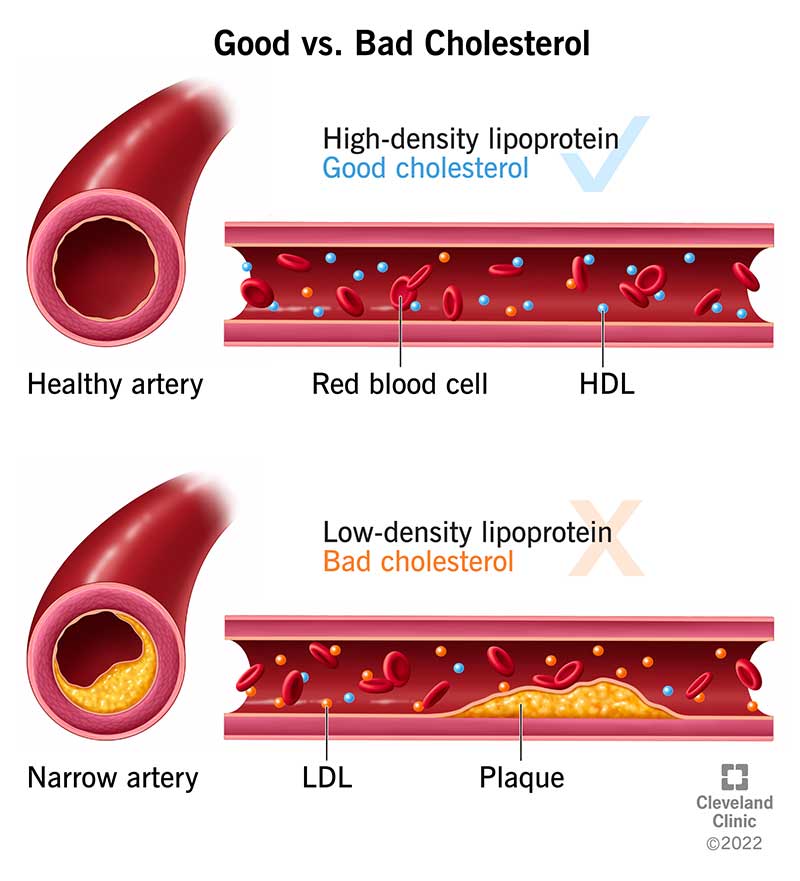
Cholesterol is simply a waxy substance created by the liver that circulates in the bloodstream. It is a lipid molecule that plays a critical role in various physiological processes, but it is often portrayed negatively due to its association with cardiovascular diseases. Cholesterol is required for building cells, vitamins, and creating hormones such as vitamin D, testosterone and estrogen, and fat-dissolving bile acids.1 Cholesterol is transported through the bloodstream mainly via two of the body’s lipoproteins- high-density lipoprotein (HDL) and low-density lipoprotein (LDL).2 LDL cholesterol is often called “bad” cholesterol and is associated with the buildup of plaque in arterial walls2. HDL cholesterol is often called “good” cholesterol and helps to remove excess overall cholesterol from the bloodstream and transport it to the liver for excretion2.
How Statins Work
Statins are a class of drug used to lower your overall cholesterol levels by targeting the amount of LDL cholesterol in the bloodstream. Mainstream statins include atorvastatin (Lipitor), fluvastatin (Lescol XL), lovastatin (Altoprev), pitavastatin (Livalo), pravastatin, rosuvastatin (Crestor) and simvastatin (Zocor). Statins have two components; the pharmacophore, which is a dihydroxy heptanoic acid segment, and a ring system with diverse substituents.3 Though different types of statins differ somewhat in their structure, all statins have similar mechanisms of actions.3 HMG-CoA reductase is a key factor in the production rate of cholesterol by binding to a specific active site. The pharmacophore of statins is similarly shaped to HMG-CoA reductase and bonds to said active site instead, preventing the reductase from doing so.3 This results in a lower rate of LDL cholesterol formation which yields lower LDL cholesterol levels overall throughout the bloodstream. In addition, statins increase the liver’s sensitivity to LDL by putting receptors for it on the surface of the liver.17 This allows for more LDL to be cleared from the bloodstream, further lowering the total amount of cholesterol in the body.
Advantages of Statins
Statins typically lower low-density lipoprotein (LDL) cholesterol levels by 25-60%, depending on the specific statin and dosage.5 In addition to that, statins some anti-inflammatory and anti-clotting properties. The anti-inflammatory properties arise from lower LDL levels, with the presence of lots of LDL cholesterol itself being a cause for inflammation. Lower levels help keep artery walls open and reduce the risk of damage to the heart and brain.4 The anti-clotting properties are a secondary effect of statins interacting with proteins such as TF (tissue factor), which lower levels of lead to a reduction in thrombin (the key enzyme in the clotting process).20 Specifically, statins can reduce the risk of major cardiovascular events, such as heart attacks and strokes, by about 20-30% in people with existing heart disease or high risk of cardiovascular events.5 For individuals without cardiovascular disease, but with risk factors (such as high cholesterol or diabetes), statins can lower the risk of a heart attack or stroke by around 25-40%.5
The Harms of Statins
While statins do lower the levels of LDL cholesterol in the bloodstream, that is not what actually reduces the risk of heart disease. The secondary benefits that statins have, anti-inflammatory and anti-clotting properties, are what truly help to prevent strokes or heart attacks. Furthermore, people with a naturally low risk of heart disease only have approximately a 1% less chance of contracting some form of it through statin uage6 and should only expect about a 3 to 4 day increase in total lifespan.16 The harms of statins form an extensive list and far outweigh any benefits, with the most egregious and direct harms being muscle damage, blood sugar level fluctuations, liver damage, and neurological impairments.
Muscle Damage
An extremely common side effect that statin patients report is muscle pains or aches. These ailments can range from a soreness to a tiredness to marked weakness in the muscles with the intensity of pain ranging from mild to fully hindering your daily life. The truly alarming fact of the matter is that 1 in every 4 people taking statins reports some sort of muscle issues affecting them.4 In some cases, patients have developed rhabdomyolysis, a life-threatening condition where the tissues in your muscles break down. This in turn releases myoglobin into the bloodstream and causes intense muscle pain, liver damage, kidney failure, or even death.7 The risk of rhabdomyolysis is particularly high when statins are taken in a high dose or in tandem with other drugs such as amiodarone (Pacerone), gemfibrozil (Lopid), saquinavir/ritonavir (Sporanox), and cyclosporine (Sandimmune).7
Liver Damage
Prolonged statin use could also cause liver damage. Due to the interactions between statins and the liver, a higher than normal level of enzymes in the liver could occur. These higher levels of enzymes then signal to the body that there is some sort of inflammation occurring.9 If the signals persist while there is no actual inflammation, the process can end up harming the liver.
Diabetes
Another potential danger of statin usage is an increase in blood sugar levels. The method by which this occurs is still being researched, but according to the CDC, recent research has found that statins can interfere with the effectiveness of the body’s insulin.21 Unhealthy eating habits and excess sugar consumption could make it worse now that the liver’s capacity to eliminate sugar is impaired. Persistently high levels of blood sugar could also lead to type 2 diabetes.9
Neurological Impairments
One of the most serious harms caused by statins is neurological impairment. The FDA expressly cautions on statin labels that some patients have developed memory loss or chronic confusion/brain fog while taking statins. According to the research of Dr. Beatrice Golomb, based in San Diego, California, nerve problems are a common side effect from statin use. Patients who use statins for two or more years are at a 4x – 14x increased risk of developing idiopathic polyneuropathy compared to those who do not.11 Polyneuropathy refers to when there is peripheral nerve damage and symptoms include problems with coordination, sensations, and overall motor functions. Dr. Golomb reports that in many cases, patients told her they had complained to their doctors about neurological problems, only to be assured that their symptoms could not be related to cholesterol-lowering medications.11 Although minor cognitive effects usually resolve themselves after stopping statin usage, this is not an option for patients since the benefits of statins come only from long-time or life-long usage. Choosing between impaired cognitive functions or the threat of heart attack is not a choice that anyone should be forced to make.
How Pharma Pushes Statins
Despite the overwhelming evidence regarding the harms of statins, doctors often brush aside patient complaints and continue to push statins and, in some cases, even berate patients if they stop taking statins due to the unbearable side effects. This extremely concerning situation must not only be brought further into the public view, but remedied with the utmost speed.
The landmark study that is often cited to support statins is the Framingham Study. It was pivotal in strengthening the belief that high total levels of cholesterol is a big risk for heart disease and therefore a cause for serious concern. However, what generally goes under the radar about this study is that this correlation only existed in those patients over 50 years of age that had a cholesterol level higher than 300 mg/dL (milligrams per deciliter) which is extremely rare in the first place6. What is shocking is that for patients in that age range, as cholesterol levels dropped, the mortality rate from conditions unrelated to heart disease, such as cancer and respiratory diseases increased!6 Let that sink in for a moment. This calls into question both the efficacy of cholesterol treatments as a whole, as well as the ethics behind statin prescriptions. Despite the flawed landmark study, many studies, almost always funded by big pharma , have purported to show that statins reduce heart disease. These studies rarely focus on overall mortality.
The marketing and pushing of people towards statins is quite manipulative. For example, according to A Midwestern Doctor, a meticulous and thorough writer focused on bringing pharmaceutical corruption to light, “once a drug is identified that can “beneficially” change a number, medical practice guidelines will gradually shift to prioritizing treating that number rather than the underlying disease and before long, rationales will be created that require more and more of the population to be subject to that regimen. In the case of statins, prior to their discovery, it was difficult to reliably lower cholesterol, but once they hit the market, research rapidly emerged stating that cholesterol was more and more dangerous and, hence, that more and more people needed to be on statins”16. This ploy has been extremely effective in increasing statin sales. For example, based on data from 2008-2009, 12% of Americans over 40 years of age reported taking statins. However, that number jumped to 35% by 2018-2019.16
Natural Approaches for Reducing Cholesterol
After reading the plethora of reasons as to why statins should not be used, you may ask yourself what can be done to reduce cholesterol. There are numerous ways in which cholesterol can be controlled in natural and healthy ways. Common strategies for doing so include controlling your diet and eating foods that are healthy for the heart. Simple things such as reducing the amount of trans fat (found in fast food, restaurant food, and processed foods sold in stores), eating foods with high concentrations of Omega-3 fatty acids (such as salmon, walnuts or flax seeds), increasing the soluble fiber in your diet (from foods such as oatmeal, kidney beans, or fruits such as apples and pears), or even eating whey protein can all have an extremely positive impact upon your overall heart health.12 Also playing into the dietary side of things, cutting alcohol or smoking out of your life can greatly reduce risk of heart disease on top of preventing the myriads of other health problems caused by them. Smoking is especially detrimental to your heart health and according to an article for Healthline.com, smokers are 2 to 4 times as likely to develop heart disease, on top of that, they are 2 times more likely to have strokes.15 Consistent exercise can also help keep the levels of HDL in the bloodstream up, reducing the risk of heart disease. While exercising at a gym can be extremely beneficial, if you cannot work the time to do so into their daily schedule, easy ways of incorporating exercise throughout your day include taking walks, bike riding, or even intramural sports.
In addition, supplements that contain nattokinase and pine bark extract have been shown to help improve cardiovascular health. Nattokinase also reduces blood pressure, keeping the arterial walls undamaged/healthy, which in turn reduces risk of heart disease. As stated above, consistently high blood pressure can lead to arterial lining damage, but its other consequences could manifest as anything from aneurysms to eye damage.18 Pine bark extract has been proven to have anti-inflammatory properties, allowing for further upsides to your heart health.15 A receptor in the body known as the Toll-like receptor 4 (TLR4) is the main receptor that is activated in order to induce an inflammatory response.15 However, the body has many other inflammation receptors and a study from 2019 showed that pine bark supplements help to partially inhibit these other receptors as well in the presence of inflammation inducing agents.15 According to an article from Stanford Medicine, some direct links that pine bark extract have to cardiovascular health are- “improved glycemic control, an improved lipid profile, and blunted platelet aggregation”22.
Sources
- https://medlineplus.gov/cholesterol.html
- https://www.cdc.gov/cholesterol/about/index.html
- https://www.news-medical.net/health/What-are-Statins.aspx#:~:text=Chemical%20structure%20and%20pharmacokinetics,ring%20system%20with%20diverse%20substituents
- https://millionhearts.hhs.gov/learn-prevent/scoop-on-statins.html#:~:text=Statins%20are%20a%20class%20of,is%20already%20in%20the%20blood
- https://academic.oup.com/eurjpc/article/30/17/1881/7223536
- https://nexusnewsfeed.com/article/health-healing/just-say-no-to-statins/
- https://www.mayoclinic.org/diseases-conditions/high-blood-cholesterol/expert-answers/rhabdomyolysis/faq-20057817#:~:text=Although%20mild%20muscle%20pain%20is,muscle%20cells%20to%20break%20down.
- https://regenexx.com/blog/why-statins-are-really-bad-for-you/
- https://www.mayoclinic.org/diseases-conditions/high-blood-cholesterol/in-depth/statin-side-effects/art-20046013
- https://my.clevelandclinic.org/health/symptoms/21660-inflammation
- https://www.westonaprice.org/health-topics/modern-diseases/dangers-of-statin-drugs-what-you-havent-been-told-about-popular-cholesterol-lowering-medicines/#gsc.tab=0
- https://www.mayoclinic.org/diseases-conditions/high-blood-cholesterol/in-depth/reduce-cholesterol/art-20045935
- https://www.healthline.com/health/smoking-and-cholesterol
- https://www.imrpress.com/journal/RCM/24/8/10.31083/j.rcm2408234/htm
- https://www.healthline.com/nutrition/pine-bark-extract#benefits
- https://substack.com/@amidwesterndoctor/p-146062962
- https://www.healthline.com/health/high-cholesterol/how-do-statins-work#how-they-work
- https://www.mayoclinic.org/diseases-conditions/high-blood-pressure/in-depth/high-blood-pressure/art-20045868#:~:text=High%20blood%20pressure%20can%20narrow,irregular%20heart%20rhythms%2C%20called%20arrhythmias.
- https://www.medicinenet.com/what_happens_in_oxidation/article.htm
- https://pubmed.ncbi.nlm.nih.gov/10528826/#:~:text=Thrombin%20is%20an%20unique%20molecule,a%20burst%20of%20thrombin%20formation.
- https://www.cdc.gov/diabetes/diabetes-complications/statins-and-diabetes.html#:~:text=Some%20research%20has%20found%20that,who%20have%20high%20blood%20cholesterol.
- https://med.stanford.edu/ppop/pinebark.html#:~:text=The%20blood%20pressure%20lowering%20effect,of%20endothelial%20nitric%20oxide%20synthase.